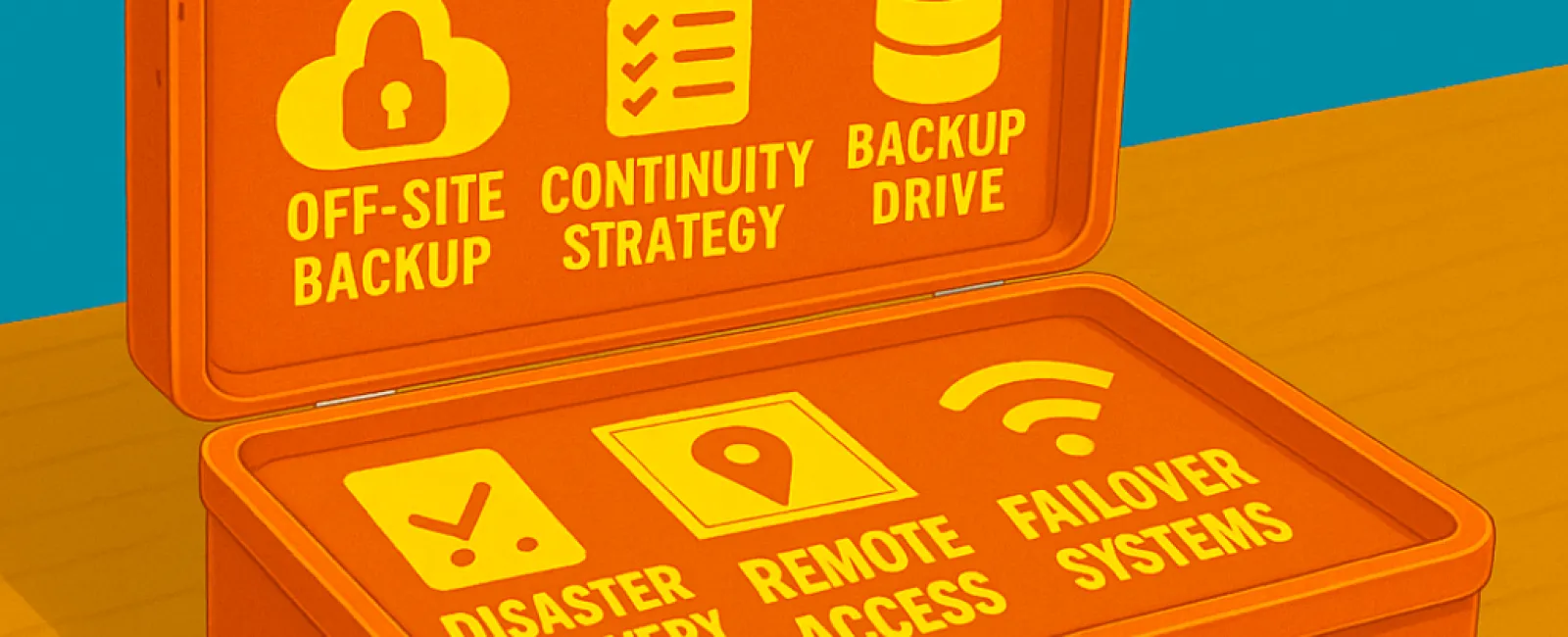
Unexpected power failures, cyberattacks, hardware malfunctions, and natural catastrophes can strike without warning, causing severe disruption to small businesses. Many believe that simply having backups suffices, but recovering a file is far from maintaining full business functionality. Without access to your systems, the ability to support remote work, and effective communication with your team and clients, even brief interruptions can escalate into significant setbacks. A dependable IT partner will equip you not only with backups but also a comprehensive strategy to ensure your business stays operational under any circumstance.
Backups Alone Aren't Enough — You Need a Robust Continuity Plan
Backups are crucial, but they represent just one piece of a larger puzzle. What truly safeguards your business is a business continuity plan — a forward-thinking approach designed to keep your operations running smoothly during and after any crisis.
When systems fail, data becomes unreachable, or your physical office is compromised, having only a backup stored locally offers limited relief. Without a swift and well-structured recovery plan, your business faces significant risks including lost revenue, damaged reputation, and regulatory violations.
Understanding the Critical Difference: Backups vs. Business Continuity
Many businesses make the mistake of relying solely on backups:
●
Backups restore your data.
●
Continuity ensures your business keeps running regardless of disruptions.
A solid continuity plan addresses vital questions such as:
●
What is our recovery time objective?
●
Where will our team operate if the office is inaccessible?
●
Which systems are essential for mission-critical operations?
●
Who is responsible for initiating the recovery process?
The plan also incorporates key elements such as:
●
Encrypted, off-site, and immutable backup solutions
●
Prioritized recovery objectives (RTO and RPO)
●
Remote work capabilities and readiness
●
Redundant infrastructure and failover mechanisms
●
Routine disaster simulation drills and testing
If your IT provider cannot confidently guide you through these components, your business isn’t truly protected — you’re merely fortunate to have avoided disaster so far.
Could This Happen to You? Absolutely.
This isn’t just a scare tactic — these are real scenarios with tangible impacts. Recently:
●
Florida hurricanes forced hundreds of businesses to close, completely immobilizing those without cloud access.
●
North Carolina floods wiped out on-site servers, erasing months of critical data and invoices.
●
California wildfires destroyed entire offices in the Pacific Palisades, many lacking off-site recovery plans.
●
Numerous small businesses targeted by ransomware attacks discovered their backups were corrupted or untested.
Disasters don’t discriminate by business size — they affect companies just like yours every day.
Essential Questions You Need to Ask Today
If disaster strikes tomorrow, will your business continue operating?
Challenge your IT provider with these questions:
●
How quickly can we recover if ransomware attacks occur?
●
Are our backups regularly tested, and which systems do they cover?
●
What’s the recovery plan if a flood or fire destroys our office?
●
Does our continuity strategy comply with industry regulations?
●
Can we maintain client services if our team must work remotely?
If you can’t answer these with full confidence, your business is vulnerable.
Disasters Are Inevitable. Downtime Doesn’t Have To Be.
While you can’t prevent every outage, storm, or cyberattack, you can control how your business responds.
A reliable IT provider helps you bounce back quickly.
An exceptional one ensures your operations never miss a beat.
Ready to assess your business’s preparedness?
Click Here or call us at 503-210-5203 to schedule your FREE Systems Assessment, and let’s protect your business from downtime before disaster strikes.