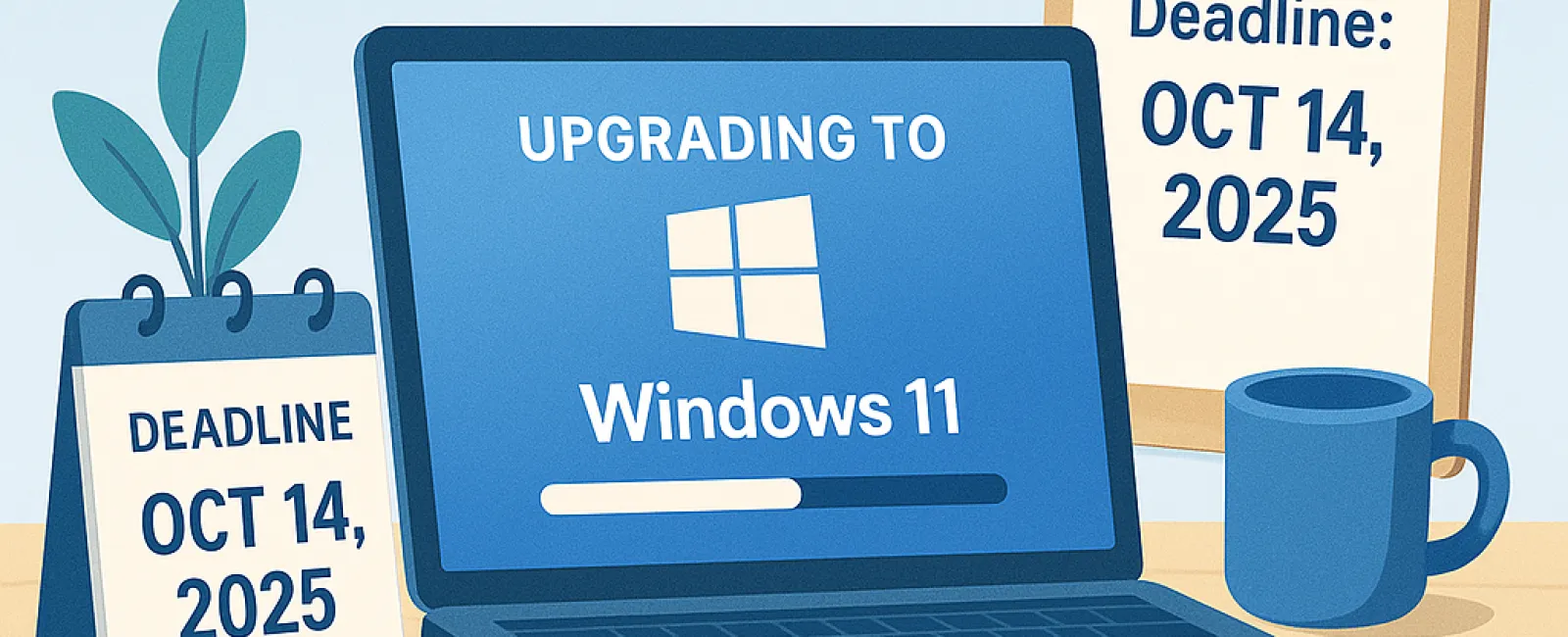
If your business is still relying on Windows 10, it’s time to act—because the clock is ticking fast.
Starting October 14, 2025, Microsoft will officially stop supporting Windows 10. This means no more security updates, no bug fixes, and no technical assistance.
But the real issue for business owners isn’t just the upgrade itself—it’s the hidden costs of delaying it.
Delaying could be costing you right now.
"We’ll Handle It Later" Can Be A Costly Mistake
We understand—upgrading every device isn’t the most exciting expense. It’s tempting to push it off... until something breaks.
Here’s the true price of procrastination:
1. You’re Exposed Without Protection
After Microsoft ends Windows 10 updates, every new security risk falls on you.
Hackers target outdated systems because they’re easy prey—it’s like locking your front door but leaving the windows wide open.
A single breach could cost thousands—or even jeopardize your entire business.
2. Compatibility Challenges With Software And Hardware
Many critical business applications—accounting, CRMs, industry-specific platforms—are already dropping support for Windows 10.
If your systems fail mid-project or crash during a client presentation, how much could that cost you?
And it’s not just software—new printers, peripherals, and security tools may no longer work with your outdated OS.
3. Decreased Productivity
Older systems run slower, crash more often, and frustrate your team. Even minor delays add up, reducing efficiency, morale, and your competitive edge.
If each employee loses 10–15 minutes daily due to tech issues, what’s that costing your business monthly?
4. Emergency Upgrades Cost More
Waiting until systems fail or your team is locked out doesn’t just cause stress—it triggers panic spending with:
● Emergency hardware orders
● Rush IT labor fees
● Business disruptions while equipment is replaced
Planning ahead now prevents costly last-minute chaos.
5. Risk Of Compliance Violations
If your business handles sensitive data or must comply with regulations like HIPAA or PCI-DSS, running unsupported systems could lead to fines or lawsuits. Many regulations require up-to-date security standards—which Windows 10 won’t meet after October.
What Savvy Business Owners Are Doing Today
They’re proactively upgrading—not just replacing devices, but using this opportunity to:
● Audit and retire outdated devices
● Streamline software and tools
● Strengthen cybersecurity defenses
● Strategize IT budgets for 2025 and beyond
How To Ensure A Seamless Upgrade
Follow these steps for a smooth transition:
● Perform a compatibility check – Identify which machines support Windows 11 and which need replacing.
● Audit your applications – Confirm your essential software works flawlessly on Windows 11 or newer.
● Budget for new hardware now – Avoid supply chain delays later.
● Partner with a trusted IT provider – Let experts manage the upgrade end-to-end, ensuring zero downtime and no surprises.
Don’t Wait For October To Scramble
Delaying will cost you more—in money, stress, and lost opportunities. We help small businesses upgrade smartly: with careful planning, smooth execution, and a focus on future growth.
Click here or call us at 503-210-5203 to schedule your FREE Systems Assessment. We'll help you pinpoint what needs upgrading, what can stay, and create a transition plan that keeps your business running smoothly before the deadline.