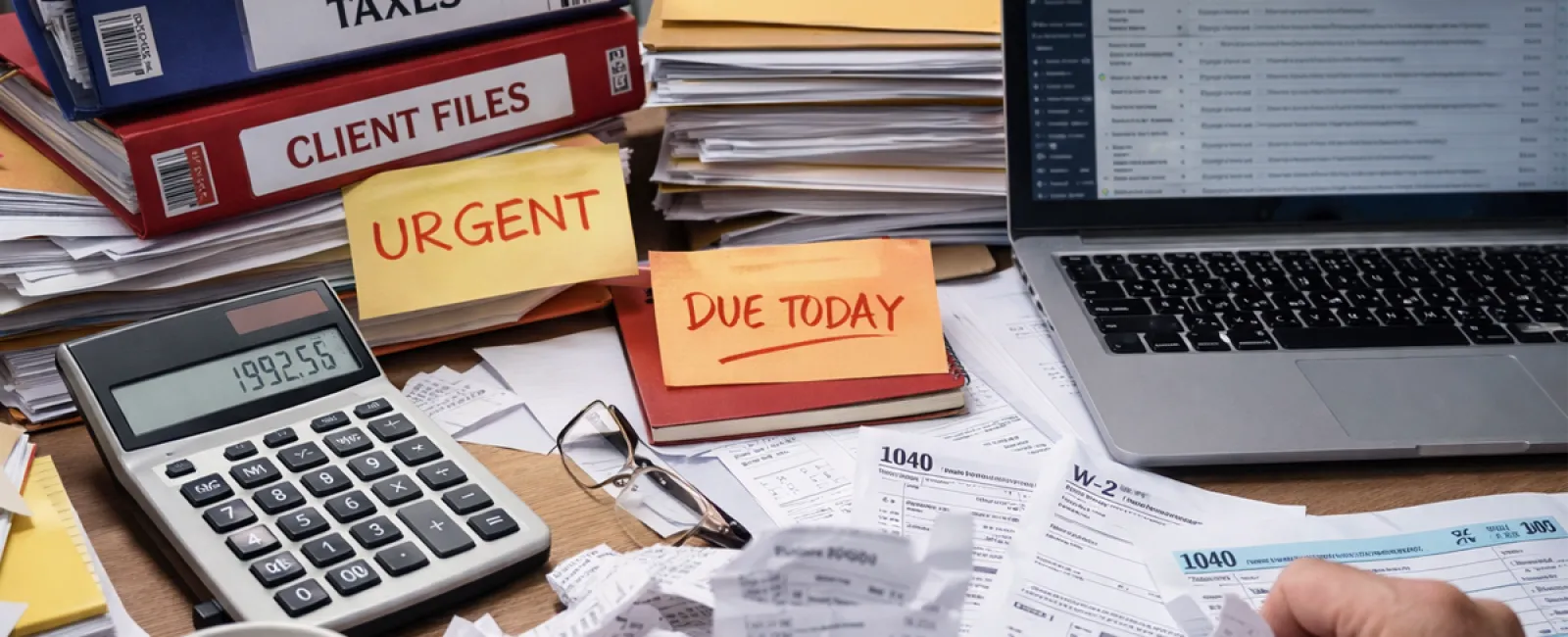
Welcome to March, the peak of tax season.
Your accountant is overwhelmed, your bookkeeper is racing against the clock, and looming deadlines send emails flying faster than anyone can handle.
Everyone is focused solely on pushing through this demanding period.
While this may be familiar to you,
it's also well-known to cybercriminals.
Security experts consistently report a notable surge in phishing attacks during tax season, with March alone seeing approximately a 28% rise in tax-related scam emails compared to calmer months. These emails are subtle — crafted to blend seamlessly with typical business communications during the busiest time of the year.
This isn't coincidence.
It's strategic timing.
Here's what's ahead and four practical steps to protect your business from becoming an easy victim.
Understanding the Strain on the Supply Chain
Here's a common oversight you should know:
Cybercriminals don't only target accounting departments.
They exploit the confusion and urgency swirling around.
During tax season:
- Clients hurriedly send sensitive information
- Team members bypass routine checks to manage increased workload
- "Just send the file" replaces cautious verification
- Double-checking slips as everyone struggles to keep up
The entire process accelerates,
and haste breeds mistakes.
Hackers don't target calm, organized companies.
They prey on the overwhelmed and busy.
And March is precisely that season.
Recognizing These Attacks
This is no fiction.
You'll find scam emails disguised as routine messages in your inbox.
- An email from "your accountant" requesting a resend of W-2 forms due to transmission issues
- A vendor notifying you of banking information changes and asking for updates
- A DocuSign request urging immediate signature on tax documents
- An urgent plea from "your CEO," supposedly traveling and needing immediate assistance
None of these seem out of place.
They resemble standard business operations in March.
That's why these scams succeed.
Why Busy Professionals Fall Victim
This isn't negligence.
It's simply human nature.
When faced with overflowing inboxes and tight deadlines, people tend to scan rather than thoroughly read, assume instead of question, and react quickly.
Scammers exploit this behavior.
Their emails are carefully crafted for hurried eyes—no need for reckless actions, just distraction.
And in March, everyone is hurrying.
Four Effective Strategies to Avoid Being an Easy Target
The good news: protecting your business doesn't require complex tools or dedicated security staff.
Simple, deliberate habits, especially during peak times, can drastically reduce your risk.
1. Confirm payment changes via phone
If you receive an email about a vendor updating bank details, do not reply electronically.
Instead, call a verified number to confirm the change
This habit can stop numerous costly scams in their tracks.
2. Be cautious with urgent requests for sensitive data
Urgency signals should prompt you to pause, not rush.
If W-2s, tax forms, or financial information is requested immediately, take time to verify.
Legitimate senders will respect a brief delay; scammers won't.
3. Validate "urgent" demands using a secondary channel
For emails marked urgent, double-check via call, text, or internal message.
This quick verification can prevent costly mistakes.
Real emergencies withstand a two-minute check; fake ones dissolve.
4. Alert your team to increased scam risks
This week, remind your staff that tax season is a prime time for scams.
Encourage slowing down, verifying information, and questioning anything unusual.
This simple cultural shift reduces cleanup efforts later.
Final Thoughts
Tax season is challenging enough without falling victim to scams.
The surge in attacks this time of year isn't about clever tricks—it's about exploiting perfect timing.
They depend on rushed minds, unchecked assumptions, and everyone pushing hard to get through March.
You don't need to overhaul your systems to stay safe.
Simply slow down when urgency strikes and verify before acting.
That alone often makes all the difference.
Busy-Season Safety Check
Perhaps your business already has protective habits—and if so, that's excellent.
But if tax season tends to throw your team into reactive mode or you're unsure how urgent requests are handled, consider a complimentary Systems Assessment for a quick assessment.
No pressure. No hype. Just an honest evaluation of simple habits that could save you headaches this season.
If this message doesn't apply to you, please share it with someone who might benefit.
Click here or give us a call at 503-210-5203 to schedule your free Systems Assessment.